

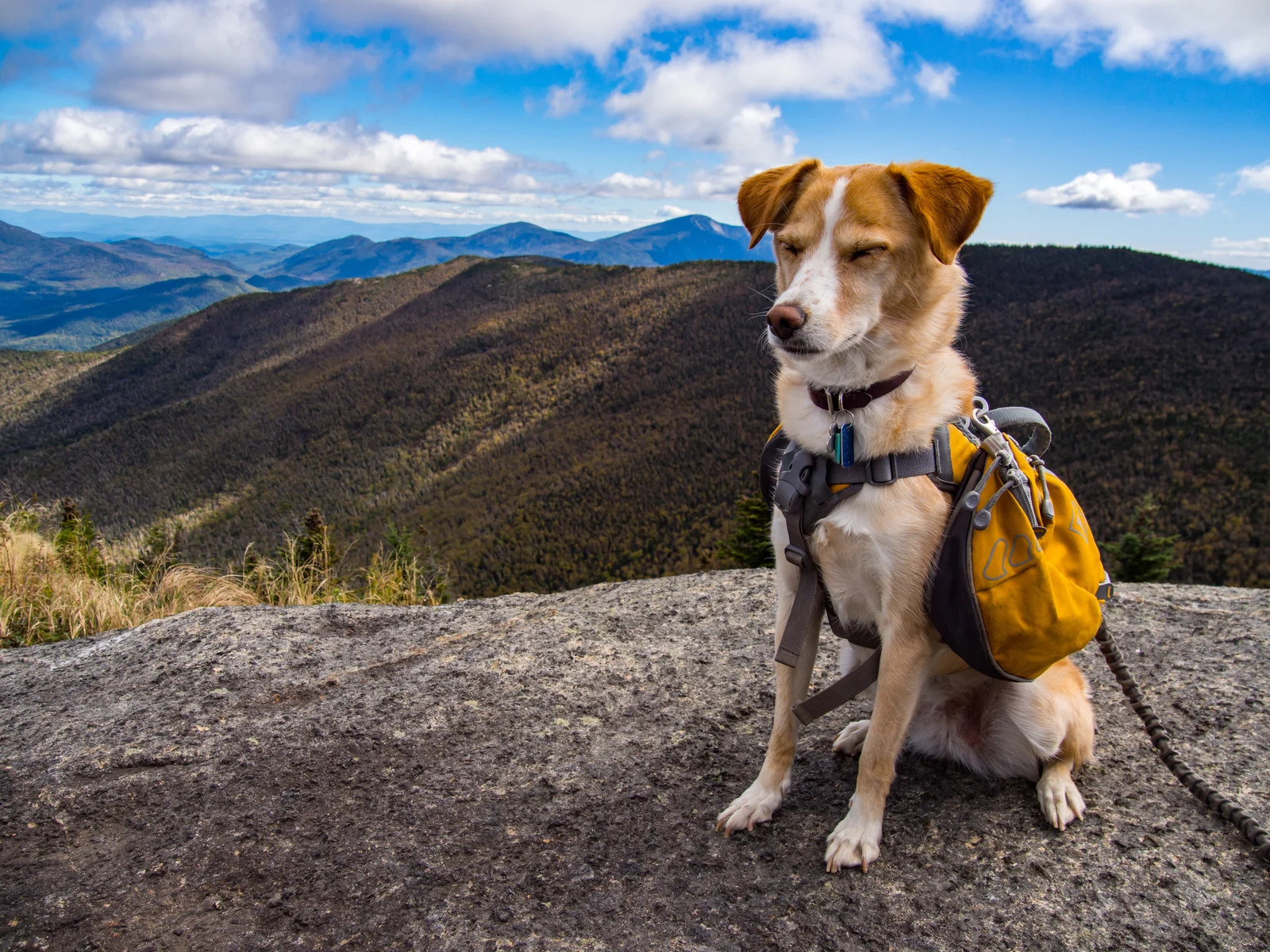
Start with a manageable route, check that dogs are welcome, and pack for both of you. Leave room in the plan to stop, turn around, or simply spend longer at a good sniffing spot.
Before you choose a trail
Think about the walks your dog already enjoys. A trail introduces different surfaces and distractions, so familiar distance alone is not the whole picture. If you are unsure whether your dog is ready, speak with your vet about fitness, vaccinations and protection against local parasites. National Park Service hiking guidance
For a first outing, look for an easy route with a straightforward way back. Read the trail description for climbing, rough ground and obstacles rather than judging it by the photographs. Build up gradually instead of making the first day a test of endurance. REI's guide to hiking with dogs
Check the specific place you are visiting
A dog-friendly destination does not necessarily allow dogs on every trail. Check the land manager's current information for access, closures and leash requirements. Keep your dog away from wildlife and collect and carry out their waste. Rules vary by place; a rule from another park or country is not a substitute for checking yours. National Park Service
Check the weather too. Hot-weather exercise can put dogs at risk of heatstroke; carrying water does not make a hot hike safe. Choose a cooler outing or postpone when conditions are unsuitable. RSPCA hot-weather walking guidance
What to pack
Use this as a starting checklist, then adapt it to your route and conditions:
Bring your own drinking water rather than relying on streams or lakes. A dog backpack is optional; you can carry the supplies yourself. REI's packing and trail guidance
Let the day stay flexible
Pause for water and check how your dog is coping throughout the outing. If something seems wrong, stop rather than trying to finish the route. National Park Service
Pick a turnaround point before you leave, but treat it as a limit, not a target. The return journey is part of the day too. There is nothing to make up for if the best part of your first hike happens near the beginning.
Before the next one
Afterwards, check paws and look for ticks, particularly after walking through vegetation. REI
Write down a few details while they are fresh: where you went, roughly how long you were out, and whether you would choose that path again. The useful record is the one that helps you plan a comfortable next outing.
Back to top ↑